SailPoint
1 Year
Design Systems · Figma Migration · Cross-Functional Alignment · Component Architecture
TIMELINE
1 Year
MY ROLE
Sr. Product Designer
COMPANY
SailPoint
Before
Context
When I joined SailPoint as the first new designer in three years, the Armada design system existed in name only. It had been copied from IBM Carbon, modified in Adobe XD, and never meaningfully adopted. The five designers on the team each maintained their own component libraries. Engineering had purchased and was using a completely separate UI library. No one agreed on what the source of truth was, because there wasn't one. Design files drifted from code constantly, and when designers handed off work, engineers had a reasonable argument for ignoring it: the specs didn't match what they were actually building. That friction had calcified into a real cultural problem. Designers were frustrated that dev wasn't following their work. Engineering was frustrated that design didn't understand the realities of implementation. Both sides had been fighting long enough that the conflict had become personal. I was new. Nobody had a grudge against me yet, which turned out to be the most important thing I had going for me.

What I Did
The Work
I started with a full audit, every component across design and code, every visual inconsistency, every place where the two libraries had drifted apart. Then I sat down with two engineers, and we built shared standards from scratch together, which was the only way to make something both sides would actually use.
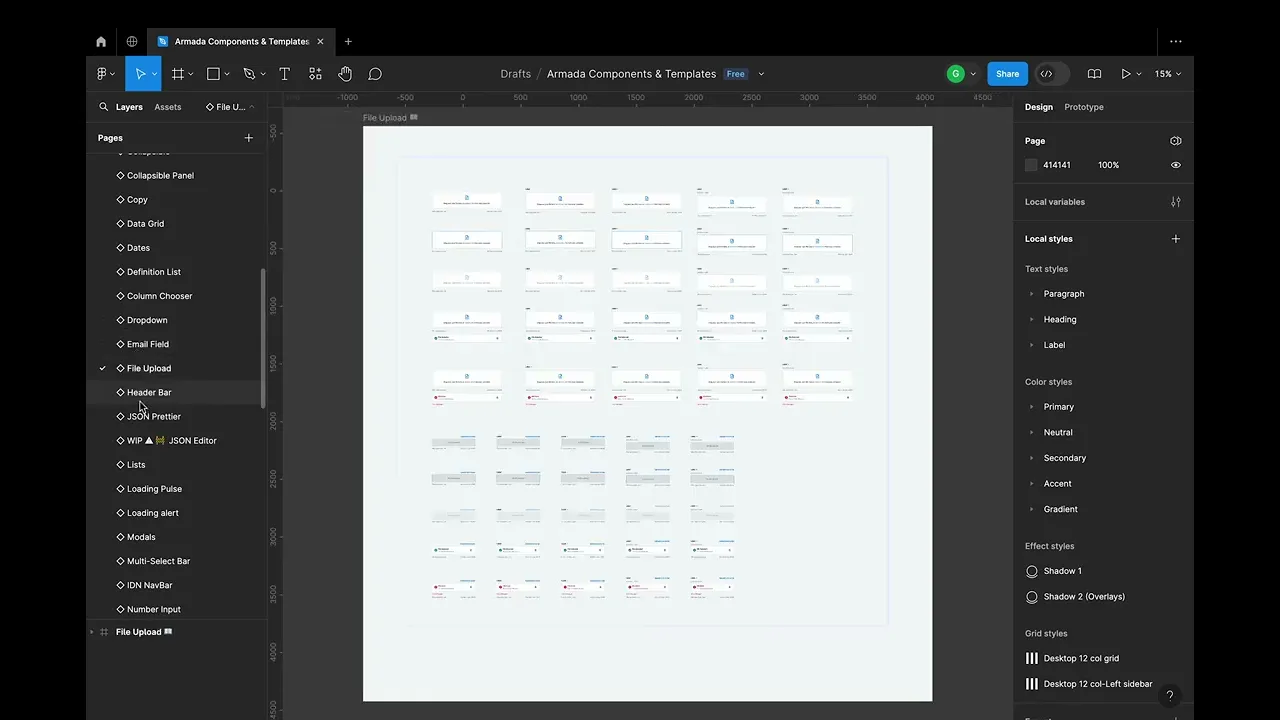
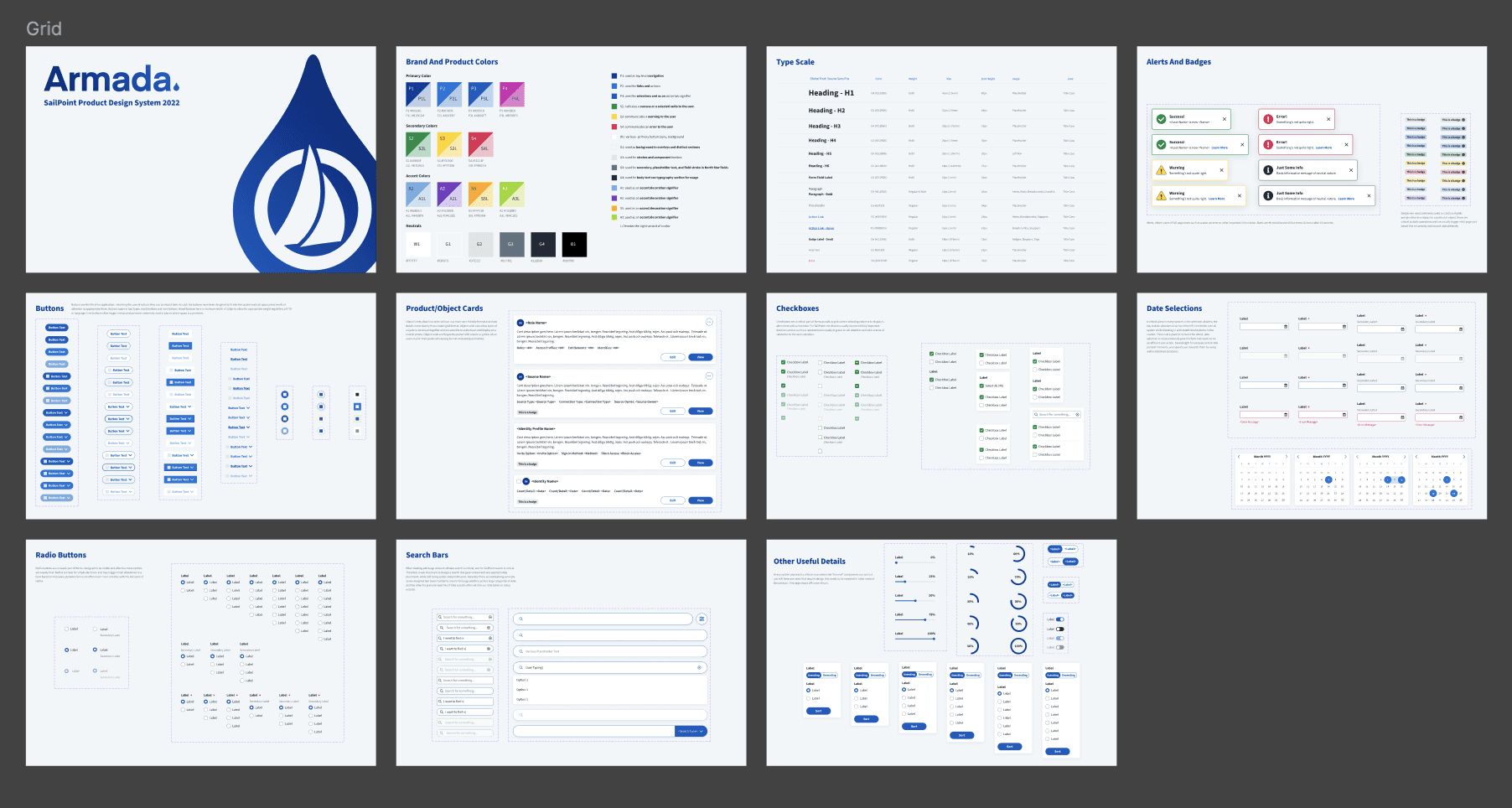
The rebuilt Armada system ended up with roughly 100 components, all complex, all documented, migrated into Figma with a component-linking structure designed to stay in sync as the product evolved. I introduced shared vocabulary between design and engineering so that conversations about components stopped being arguments about whose version was right.
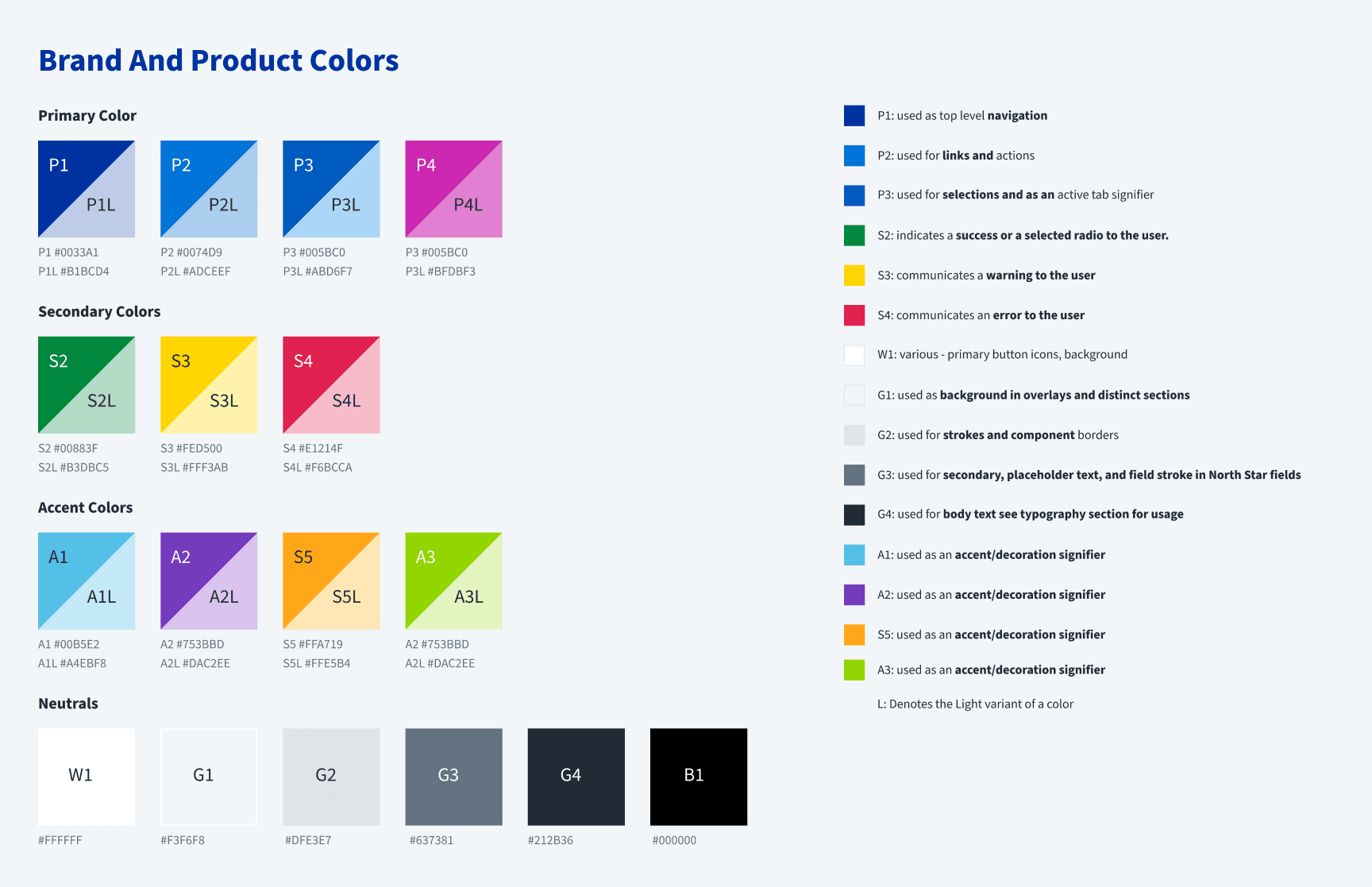
When corporate pushed a rebrand with two weeks' notice, Armada became the reason we could push back intelligently. I ran a full analysis of what the new brand standards would actually require in production, and found real problems. The new color combinations didn't pass accessibility standards. Proposed hover states failed contrast checks. The updated logo spacing rules would have forced us to increase the nav bar height, which our enterprise customers had been asking us to shrink for years; we'd just gotten it down to 50px. And the new spacing system assumed a single visual density, which doesn't work in a B2B tool where some screens are designed to look clean, and some are intentionally dense data tables built to show as much as possible on a small screen. We implemented the rebrand. But we implemented it correctly, adapting the standards to the product's actual constraints rather than blindly applying rules that would have broken things.
By the time I left, the team had grown from five designers to eight. All of them working from the same system.
Impact
Impact.
Results & Outcomes
Handoff time dropped from roughly a week to a few days, with a significant reduction in Slack questions from engineering, a shift visible enough that it was cited at a company-wide town hall. QA escalations caused by UI inconsistency dropped substantially. Design and engineering aligned around a single source of truth for the first time. And when the rebrand came, Armada was the infrastructure that made it possible to implement it thoughtfully instead of chaotically.

See It In Action